A dried splash on a glazed tile and a dull patch on natural stone may look similar from across the room. They can need very different responses. One may be removable residue; the other may be damage to the surface itself. Cleaning cannot put a finish back after an unsuitable acid or abrasive has removed it.
Start with the manufacturer’s care instructions. Identify the material and any coating, then identify the likely soil: loose dust, grease, dried food or mineral deposit. If you cannot identify a valuable or delicate surface, pause rather than testing a strong product on it. A repair specialist or the manufacturer can be more helpful than a cupboard full of increasingly aggressive cleaners.
A sequence that gives your hands less to do
- Remove loose material. Lift crumbs or dust with a suitable soft tool, avoiding grit dragged across a finish.
- Apply a compatible cleaner. Use the label’s dilution and a method approved for the surface.
- Allow the stated time. Do not let a product dry on the surface unless its instructions say to.
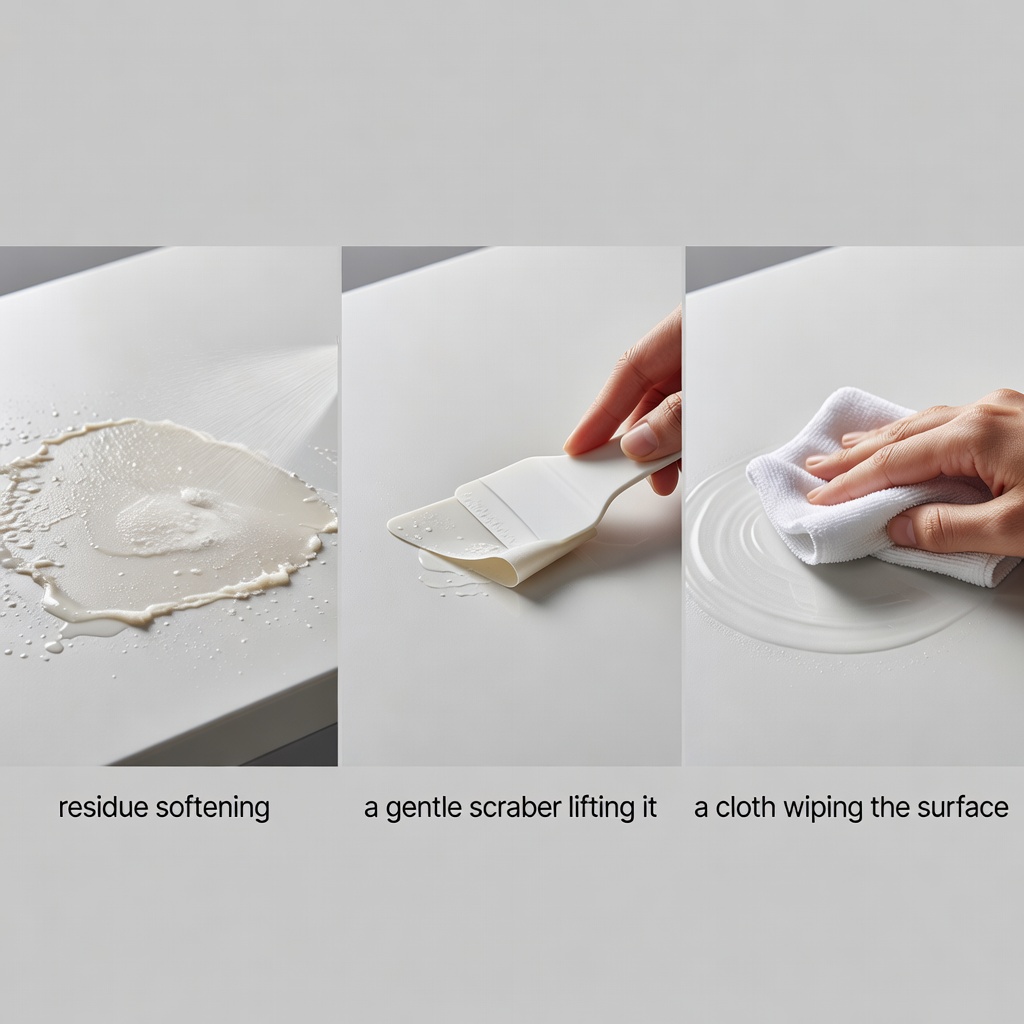
- Use gentle movement. Lift softened residue rather than grinding it into the finish.
- Rinse or wipe as directed, then dry. Check food-contact instructions and avoid leaving moisture in seams.
For a washable bowl with dried food, soaking may let water penetrate the residue before a soft scraper lifts it. That does not mean everything should be submerged. Wood, glued joints, electrical items and some coatings can be damaged by prolonged moisture. Keep electrical equipment disconnected where instructed and never immerse parts not designed for immersion.
The working edge matters
A soft scraper concentrates force at its edge without behaving like a metal blade. A squeegee moves water toward an edge so there is less left to evaporate. Neither tool removes every kind of soil, and either can scratch if grit is trapped underneath. Rinse or inspect the edge during use, not just after the job is finished.
Microfibre cloths have fine fibres that can collect particles and help remove some soils through mechanical action. They are not automatically disinfecting, and their performance depends on the cloth, condition and method. Use separate cloths for toilets and food-preparation areas. Launder according to the care label, let them dry fully and replace damaged or persistently soiled cloths.
Melamine foam works as a fine abrasive. Its apparent softness does not make it safe for polished, coated or glossy surfaces. Test only where the surface maker permits and recognise that a small hidden test cannot guarantee long-term compatibility. If a product’s instructions exclude your material, do not test your way around that warning.
Fizz is a reaction, not a performance rating
Vinegar contains acetic acid, while baking soda is sodium bicarbonate. Together they react, releasing carbon dioxide and consuming much of their acidity and alkalinity. The bubbles are visible, which makes the mixture persuasive on video. They do not establish that it cleans a particular stain better than a suitable single product used correctly.
An acid can help dissolve some mineral deposits on compatible surfaces, but it can etch marble, limestone and other sensitive materials. Baking soda can act as a mild abrasive, but “mild” is relative to the surface. Neither should be presented as a universal cleaner or a substitute for a registered disinfectant when disinfection is needed.
Never mix bleach with ammonia, acids or other cleaners. Dangerous gases can result. Keep products in their original containers, follow labels and provide ventilation. If exposure causes symptoms, leave the area if safe and contact local emergency services or a poison information service.
Cleaning and disinfecting are different jobs
Cleaning removes soil and can reduce germs. Disinfecting uses a suitable product to kill specified germs under the conditions on its label. Routine cleaning is often the starting point; circumstances such as illness may call for additional measures. Follow relevant public-health guidance rather than assuming that a strong smell means a surface is safer.
Disinfectants may require the surface to remain visibly wet for a specified contact time. Dilution, ventilation, protective equipment and any required rinse are product-specific. In the United States, the Environmental Protection Agency registers surface disinfectants. Registration does not mean every product is appropriate for every surface or task.
Finish the job without creating the next one
Empty and rinse tools as their instructions allow. Dry brushes with airflow around the bristles and avoid sealing damp cloths in a box. Store chemicals safely, away from food and out of reach of children and pets. Do not decant them into drinking bottles, even for a quick task.
If the same patch needs repeated aggressive cleaning, investigate the cause. A leaking joint, poor ventilation or a failing finish will not be fixed by a more elaborate brush. The most useful shortcut is sometimes stopping the source of the mess.